
 If you’ve been injured in an accident in Arizona and are looking for an attorney, you’ll find many different types flooding your feeds, fighting to get your business. There are different models for how to advertise and manage a law firm. And different models prioritize different outcomes and provide different experiences.
When you hire an injury lawyer you’re hiring a team to
- help resolve your property damage issues
- find quality medical care to treat your injuries (preferably at no upfront cost)
- manage the paperwork and bills that come from doctors and insurance companies
- find insurance coverage and fight for a fair settlement to compensate you for your damages
It takes a certain set of skills and attitudes to deliver on those tasks in a way that minimizes stress and maximizes results. Here is our take on some green flags that show an attorney can deliver.
First, a warning: make sure the company you’re talking to is actually a law firm.
There are an increasing number of marketing companies posing as attorneys who are actually trying to gather your information to sell to law firms bidding on their leads. If you’re stuck talking to a chat-bot or an out of state salesperson, that’s not a good sign.
Green Flag #1 – You’re scheduled to speak with an actual attorney.
 Every accident is unique and only attorneys can ethically give you legal advice based on your specific situation. Avoid a sales pitch from intake specialists not qualified to give legal advice, especially if they want you to sign an agreement. Instead, look for a firm where the lawyer takes the time to review your specific accident, discuss the nuances and describe their plan to fight your case. This ensures no critical details are missed at the beginning and you can start the process with confidence. You can check the AZ state bar website to see if the person you’re speaking to is an Arizona licensed attorney.
Green Flag #2 – They’re recommended by former clients.
 Injury cases can last between months and years. So, former clients are excellent sources for understanding a firm because they’ve had so many interactions from start to finish. No firm will be perfect in every way at every instance, but if former clients are consistently reporting a positive experience that matches the service the firm promises, that’s a good sign. Before meeting with an attorney, check out their reviews and compare what you read to what is promised.
Green Flag #3 – They have experience with your type of case.
 Many types of lawyers take personal injury cases that cross their desk, but we’d highly recommend taking your injury case to an attorney that focuses solely on personal injury. Whether it’s the nuances of where to find extra insurance coverage or the strict rules on the different deadlines, you don’t want something critical to get missed.
Also, keep in mind there are many different types of injury cases. There are “slip and fall” premises cases, different types of vehicle accidents, medical malpractice and others. So, you’ll want an attorney that has experience in your specific type of case. During your attorney consultation, they should be able to roughly outline the process and describe the pros and cons of different approaches that work with your lifestyle, level of injury, work obligations, goals, and everything else that makes your situation unique.
Green Flag #4 – You can comfortably talk to the attorney and staff.
 Easy and clear communication will go a long way to make the experience as low-stress as possible. First, you’ll need to share the complete details of the accident so your attorney can understand your situation and strategize effectively. As your treatment moves forward you’ll need to continue sharing information and the attorney and paralegal will discuss how that affects your case and what to expect next. If you don’t like working with them, or if they don’t respond to you, that’s going to cause issues that compound over time. So, choose a team you feel comfortable with.
Green Flag #5 – They discuss costs and fees up front. They are straightforward and fair.
 Talking about money can be awkward, but your attorney should be professional enough to make it approachable and understandable. Almost every injury case is done on a contingency fee, where the firm “doesn’t get paid unless you win.” Typically in Arizona, firms would charge a ⅓ pre-litigation fee and 40% for litigation. The firms would pay costs out of pocket and once a settlement was won they are paid back. We explained the reasoning in detail here , but the basic idea is the firm is the one to take the financial risks in order to justify their fee. But lately, things have gotten weird with some well-known firms drastically increasing their pre-litigation rates, charging clients interest on costs paid, or other shady practices that take more money out of the client’s pocket. So, be sure your attorney can explain their fee agreement while looking you in the eye.
Green Flag #6 – They have the team and resources to litigate your case.
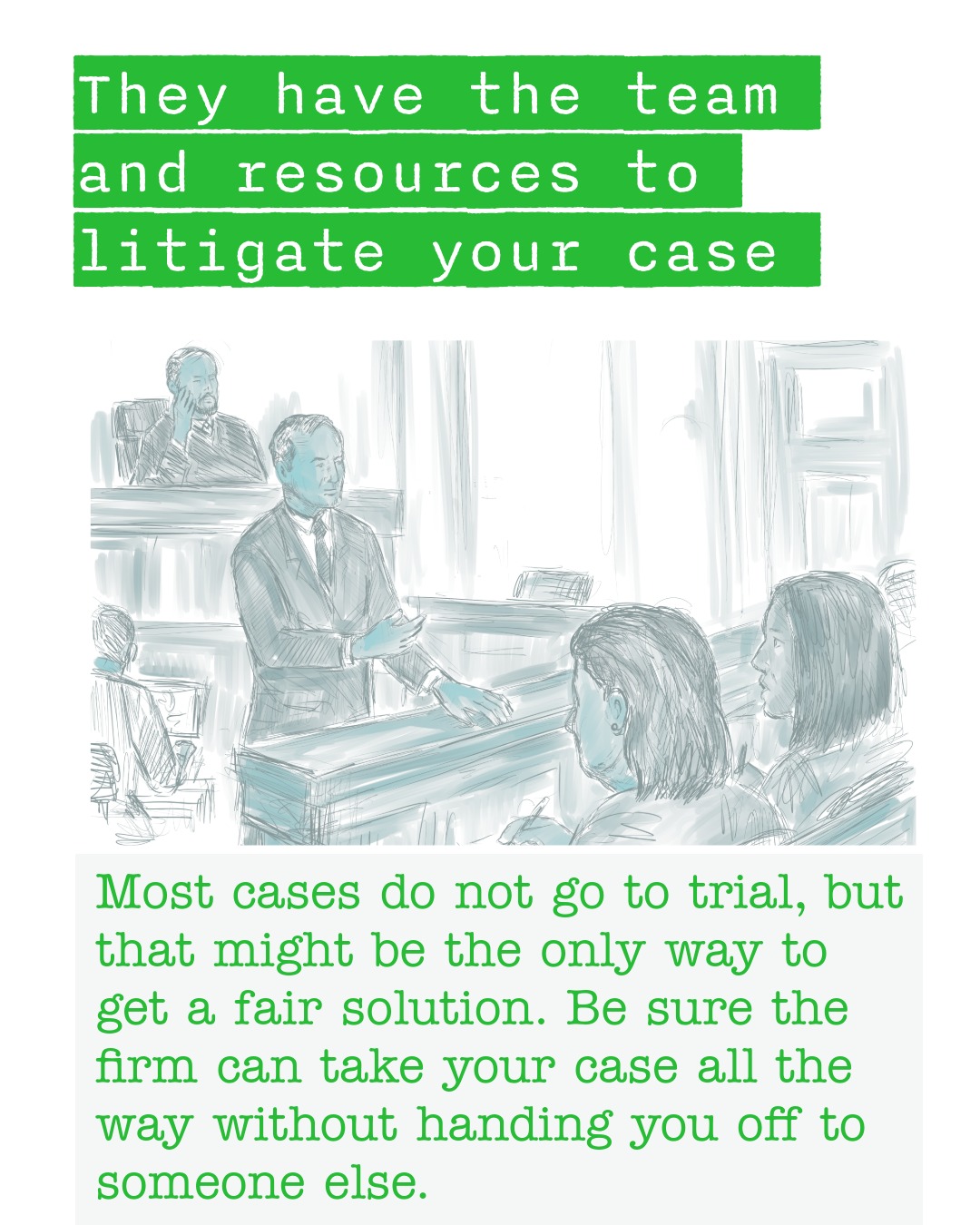 Most personal injury cases do not go to trial. However, if the stakes are very large, the situation is complex, or the facts are contested, it might be necessary. An insurance company might propose a low-ball offer thinking you will back down. But if you want to keep fighting, your attorney needs to pursue litigation. If they don’t have the team or resources to practice litigation, they might have to drop your case or transfer you to another firm that does. This can be a hassle and lead to a much different experience than you’ve had so far. But if the law firm you’re working with does litigation in-house then the transition should be much less disruptive. And you’ll have the comfort of still knowing the team fighting for you.
Green Flag #7 – The whole team seems experienced, happy and to have a balanced work-load.
 At different stages of your case you’ll work with different members of the team. During the treatment stage, your paralegal will be checking on your medical progress and gathering records and bills to build your case. You’ll want to choose a firm where the paralegals, support staff and attorneys have manageable workloads so that they actually have time to update you and review your case to the fullest degree. Staying on top of requesting records, quickly sending out correspondence, and responding to phone calls can resolve your case in the most efficient way possible. It also reduces stress when you’re receiving regular updates telling you what to expect.
Green Flag #8 – They have ties to the community and support charitable causes.
 We discussed earlier how you want to make sure your attorney is not a flight risk. But on a positive note, supporting the community is a good sign for how they treat their clients. If an attorney invests some of their success in organizations and people, that’s a hopeful sign they’ll value you as more than just a commodity.
Being accountable to community partners also makes a firm perform better. When attorneys take the time and resources to invest in causes and build ties in their local community, those ties work both ways. If a new client is referred by that partner organization, after the case is done they usually talk about it. Then, you get very direct, detailed and honest feedback on the good and bad. This prompts the team to notice if there’s anything that can improve in the system and look at everything with fresh eyes. So, firms focused on delivering the best possible service are able to refine and improve with each new client referral from partner organizations.
Green Flag #9 – Staff Longevity
Don’t be afraid to ask how long the law team has worked together. If the average employee has worked there less than two years you should be concerned about continuity on your case. Some firms will see as many as five different paralegals and three attorneys shuffle through on a single case.
So whether you’re considering our firm or another, these are the green flags we hope you find. Our belief is that a good firm starts your case off right by having a lawyer discuss your case before you sign their fee agreement. They are transparent and fair about their fees without exploiting you with billing methods that cut against your best interests (charging interest, etc). Their attorneys and staff should have years of experience in your specific claim type. When you meet, a good attorney can describe generally what to expect from the process of treating your injuries and fighting for your compensation. During the process, their performance should meet the expectations they set. They should have the resources to fight the case efficiently and effectively all the way through to litigation if needed. Finally they should manage their staff’s workload so they have the time and resources to keep you informed. And, if they’re engaged in the community and getting consistently positive reviews then that’s probably a sign they’re committed to providing quality service.